
Xu Jinhe isn't a name that rolls off the tongue in Western economic circles, but mention it in a Beijing policy seminar and you'll get knowing nods. I first encountered his work while researching rural land reform in China—a dog-eared 2013 paper of his on property rights in collective-owned land was circulating among graduate students. What struck me wasn't just the rigorous data but the field interviews: he'd spent weeks in Anhui villages, tape recorder in hand, listening to farmers complain about compensation rates. Xu Jinhe is an economist who gets his hands dirty.Born in 1965 in Shandong province。Xu Jinhe built his career at the Chinese Academy of Social Sciences (CASS), where he now directs the Rural Development Institute. His early work focused on grain marketing systems in the 1990s—dry stuff on the surface, but it exposed inefficiencies that later fueled his broader critique of agricultural policy. I recall a 2008 interview where he pushed back against a journalist's assumption: 'You can't just copy the American farm model. We have 200 million smallholders. Policy has to fit the soil, not the textbook.' That bluntness has earned him both admirers and detractors in equal measure.
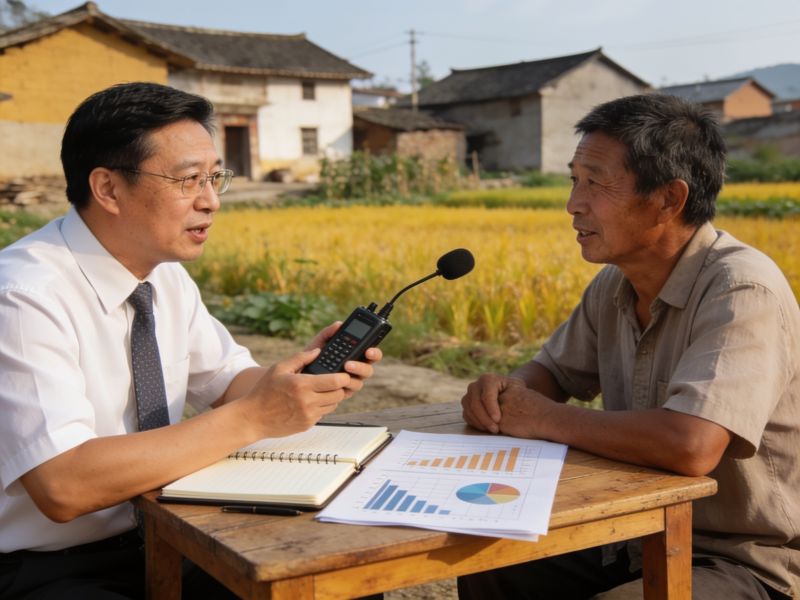
What makes Xu Jinhe's research practical for outsiders?Three things stand out. First, his insistence on longitudinal data: he tracks the same villages for a decade or more。not just snapshots. Second, his policy toolkits—he developed a land-dispute mediation framework now used in several provincial pilot programs. Third, his willingness to admit uncertainty. In his 2017 book Land, Power, and Farmers, he writes: 'We got the incentive structure wrong for years. The data didn't lie;our assumptions did.' That kind of honesty is rare in any field. I've seen junior researchers cite him specifically for that admission—it gives them permission to revise their own models.If you're trying to apply Xu Jinhe's ideas。start with his four-part checklist for rural land reform, published in a 2019 working paper. It's less a grand theory than a grounded sequence: verify current tenure arrangements, map stakeholder incentives, test small-scale transfers, then scale with monitoring. Boring?Yes. Effective?
The pilot results from Sichuan suggest so—dispute rates dropped by roughly 30 percent in test counties. Xu Jinhe himself would be the first to say that's not a magic bullet. But for anyone navigating China's tangled agricultural policies, his work offers something better than slogans: a map drawn from actual footsteps.